Showing posts with label Reading Instruction. Show all posts

Thursday, July 31, 2014

Readers Can't Be Choosers {Or can they?} // And $25 to TpT!!??

http://thebrownbagteacher.blogspot.com/

Y'all, it's confession time.  Ever since I read {who-in-the-world-knows-where} that most newspapers are written at a 5th grade reading level, I have dreamed of starting each day with reading newspapers in the classroom; discussing current events, eying the map to locate countries that are mentioned, and completing Sudoku {just had to google that because I never know if it's Sudoku or Soduko?!} or the crossword puzzle as a class.  Students would be working on their reading skills, acquiring background knowledge, and getting caught up on what's happening in the world!  Sigh... heavenly, right?  Unfortunately, as hard as I've tried, I've yet to be able to make this happen.  But as I was reading the final chapter, chapter 5, of Reading in the Wild, I realized that while this incredible-I-so-wish dream of mine seems superb, some readers aren't drawn to reading newspapers, and really they could care less if I make one available to them every day.

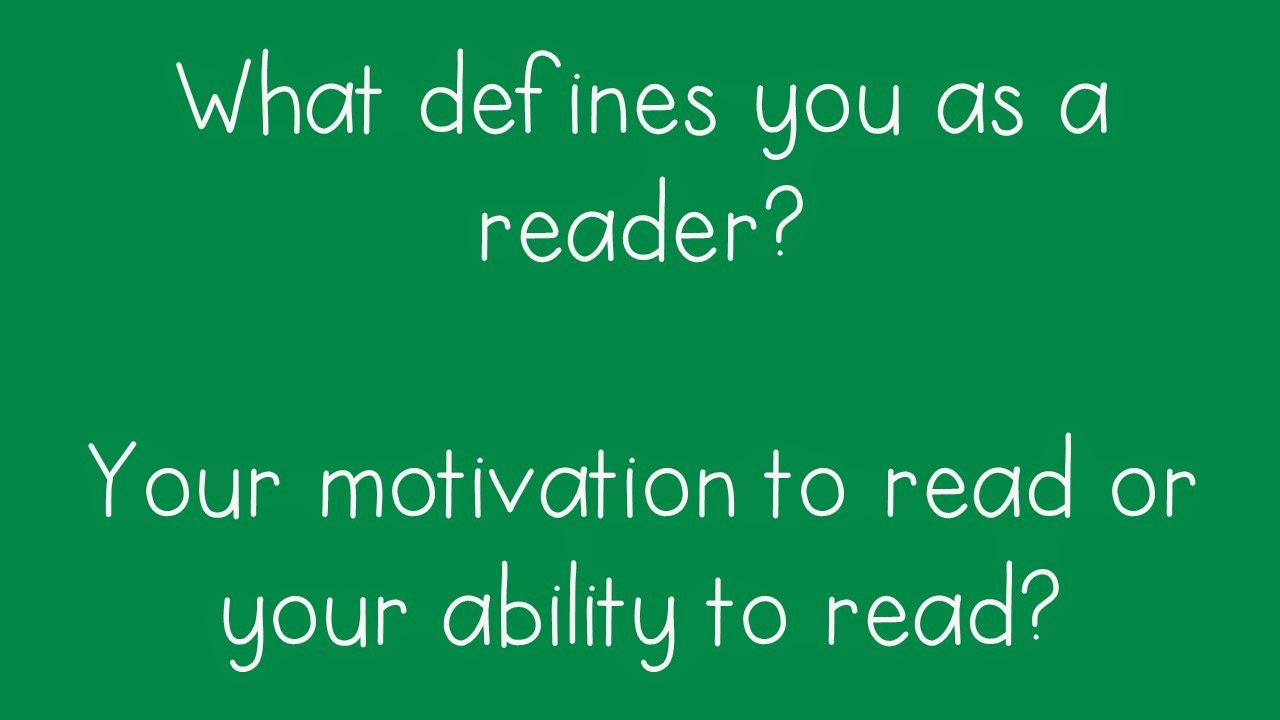
You know the student- the one who always seems to find something to do that has NOTHING to do with reading??   These students aren't bored, or incapable of reading, they just haven't yet found the right book.  Three years ago I was teaching 4th grade and had Reed in my class.  Reed had been home schooled since pre-school and while his Mom had done a wonderful job, Reed disliked reading.  For a while Reed poked around in the classroom library, chatted with friends, and flipped through picture books.  We met, I recommended books, he pretended to read them, we'd chat, he'd make up details about the book, I'd recommend more, and this went on and on.  Eventually I started to get really concerned because he was already below grade level.  I knew that in order to grow, he needed to READ!  And Reed was doing anything but reed-ing {haha sorry I couldn't help myself :)}!  Finally, one day his buddy Chris recommended the first book in the Magic Tree House series.  It was the same book I had recommended over and over and over again.  But when Chris recommended it, Reed took it and read it.  And seriously never.stopped.reading after that.  He devoured the series and then moved on to bigger and better books, looking to Chris for guidance. 

Source
Chris was Reed's mentor, his coach.  But guess who was Chris' coach...  ME!  Chris was, and still very much is, a Wild Reader who is comfortable trying new books and willing to push himself as a reader.  But as teachers, our wild readers look to us for new books.  And these Wild Readers aren't satisfied with the book their neighbor is reading.  What I learned from Reed and Chris that year is that book conversation is a MUST.  And not just, "What are you reading Chris?"  But more in depth.  "What's your favorite quote?"  "Why do you like it?"  As elementary readers, students need to learn how to have these conversations.  And we have to have the conversation with them before they can have them with other students.  By chatting with Chris about his reading, he felt comfortable talking and recommending a book to Reed.  Chris will never know how he impacted Reed's life, but Reed is now a wild reader who cannot consume enough sport books or historical fiction books to satisfy his need to read! 
https://www.dropbox.com/s/9e4s87674e9f31m/Questions%20to%20Ask%20Readers.pdf

Holding conversations can be tricky- especially with those students who are quiet anyways.  To support teachers, I have included a quick list of Questions to Ask Readers.  These questions are great conversation starters and can help even the most finicky reader open up!  So can Readers be choosers?  Yes.  Absolutely they can!  But they must choose something and they must always always always be willing to try!

Because it's that time of year and to celebrate the end :( of this great book club, I am hosting a giveaway!  You can win $25 to TpT!  Just enter below!!

a Rafflecopter giveaway

Be sure to stop back by tomorrow for a heart warming story about another sweet teacher out there in our blogisphere!  Thanks!

Thursday, July 24, 2014

Staying Motivated To Be a Reader


As readers we often come across obstacles that cut down our reading motivation.  Crunched for time, poor recommendations, lack of books... all of these crush our motivation.  I know when I was recommended Gone Girl, I was extremely disappointed.  While it rushed to the top of every chart, I was just unable to connect and love it.  Readers face these challenges.  Sometimes we allow them to set us back and not move forward right away.  Other times they drive us as readers and push us forward in our stack of "to-be read" books.  When we move forward, even after a disappointing read, we know we are really readers; not afraid of a setback!


But is this behavior in our nature?  Or is it learned from our family, teachers, and friends?  Most likely, it's a nurtured behavior, right?  One shaped by years of being surrounded by parents who read, teachers who read, and friends who read.   In chapter 4 of Reading in the Wild, Donalyn Miller addresses the need of being a reader who plans.

Now, don't freak out.  This doesn't mean we have to be regimented readers with every book strictly planned out with a goal completion date.  But it does mean that as teachers we need to model and use a "to-be read" book list.  And it does mean that we need to think ahead sometimes.  Like before a vacation.  If you're going to the beach for a week, do you only pack one book?  If you're not going to be in your classroom all summer, do you leave all your books in your classroom?  Of course not!  As readers, we need to teach our students to plan ahead; to think about what's next. I've never thought about modeling this behavior.  Sure, I've let students borrow books for winter break, but have we ever reflected on this?  No ma'am.  Miller states that we need to be planning ahead, lending out books for long breaks {such as Winter break} and thinking through these book choices.  Is it a series?  Do we need not just one book, but two or three in the series?  What times will I be able to read?  Is there a car trip involved?  Can I read in the car {or do I get carsick}?  Writing about these plans in reader's notebooks also helps hold them accountable and makes them think about themselves as readers.


And Miller doesn't stop there!!  Upon returning from these extended breaks, Miller and her students reflect on their reading.  How much did they read?  What did they like?  What didn't they like?  By reflecting on these bits of reading time, students are able to process more of their reading life.  Doing these things help them learn about their book choices too, really supporting students as they learn to live the life of a reader. I really had an "ah-ha!" moment here.  Donalyn takes things we're all doing and shows us how to utilize them as teachable moments.  I know that this coming year I will really strive to model and discuss more of our reading lives with the goal of shaping readers who enjoy reading and understand themselves as readers.  How do you plan to do this? 

I don't know about you, but my "to-be read" book list hasn't gotten much shorter this Summer- but not because I haven't been reading!  Thanks to conferences, blogs, Instagram, and Facebook, my never ending list has continued to grow- keeping me busy and happy as a reader :)  How do you spend your reading time?  What's on your "to-be read" list?

Friday, June 27, 2014

Creating a Reader's Workshop

Oh workshop. How I love thee! I am a workshop fanatic, y’all. Reading, writing, math, science, social studies…. I swear I use it for everything! Something about it is so soothing to my soul. Ideally, I have an hour for each subject, but not always. In reading and writing I like to strive for at least one hour of each. I’m not sure what my new schedule at my new school will be like, or what will be mandated, but I’m hoping I can make something like this schedule work in my new classroom.


Holding my mini-lessons to only 10 minutes {ideally} means I have to be p r e p a r e d, ALWAYS.

But it also means my kiddos get a good amount of reading time and that I love. It’s really what it’s all about, right? Actually reading and writing. Not learning about it or studying it. But doing.

Mini Lesson 
Based on the CCSS and my own anecdotals, I plan a scope and sequence that meets my student’s needs.

Independent Reading 
During independent reading time, students read, respond to their reading, and meet with me for book clubs or guided reading. In the older grades, I meet with each group once or twice a week for about 10-15 minutes and one or two groups a day. We discuss the reading and do our guided reading thang!  Our groups change about every month to every 6 weeks and are typically based on interests and student needs. I use the remaining time to confer with readers one on one. Some students I meet with multiple times a week. Others I meet with just once a month. {And most of the time I can't meet with them all enough!}  This is also the time I do assessments and running records. Every quarter I try to adjust my schedule so students are met with as needed. You can grab my reading anecdotal page here from dropbox!
Share time 
For the last 5-10 minutes, we all come together and refer back to our mini-lesson and share what we noticed about it during out reading time. I usually try to have an example ready based on my groups or independent conferences.  For example, "Today we talked about using inferences to understand our characters better.  Kate and her book club saw something really interesting today.  Can y'all share what you saw in our reading and how it helped you?"

Word Work was done at a separate time, although this year I may need to find a way to work that into our writing schedule. We shall see… Ive been doing some blog stalking and reading to see what type of options I have! 

Now, let’s be honest here. Am I great at meeting with all the groups every time we’re supposed to? Not in the least. That’s something I want to be better about. Sometimes my ADD kicks in and a group lasts 20 minutes+ . But on the good days, the schedule above is what we’re striving for. And I love love love when it goes smoothly!! I’m loving checking out everyone else’s schedules! Have you stopped by Catherine’s blog to see what everyone is up to? Be sure you do! You won’t be disappointed!

Friday, June 20, 2014

Reading in the Wild: Why Reading Time at School Really Matters

About three years ago at New Years my husband decided he wasn't happy with his reading life.  He's an avid reader but felt like he wasn't reading enough.  So he set a goal to read 52 books in one year.  To some, that may be simple.  But to him, a reader of mega non-fiction books and thick fiction chapter books, this was somewhat of a lofty goal.  Since that year, he has yet to reach his goal.  But he keeps a reading log and pushes on.  This doesn't discourage him or frustrate him.  It motivates him.  And he keeps on reading, starting over each year... thus is the life of a reader.  


Chapter 1 of Reading in the Wild has really opened my eyes to things that were right in front of me.  Coming from a reading family, I thought it was the "norm" to read while waiting for things like the doctor or to keep a reading log of what you've read.  Miller shows us in Chapter 1, however, that this is not the case.  Thinking like this must be taught and practiced.  Just this morning I was waiting at the doctor's office and was delighted that I had a few moments to read my book. Now our students must start thinking the same. 


I adore how chapter 1 is focused around the importance of not just modeling reading or teaching reading strategies, but the importance of modeling loving reading.  Miller provides a "pedagogical base for her approach to teaching reading" (introduction by Teri S. Lesesne).  Miller wants her students to not only love reading, but she also wants "them to understand why reading matters to their lives" (intro), creating readers who have an understanding of reading that isn't solely focused on how to answer test questions or write a book report. 

What shocked me the most (and I guess I had known all along *doh*) was that part of being a good reader is very simple- choosing books.  Years ago my parents got me a Kindle for my birthday.  I had always considered myself a reader, but all of a sudden I had complete access to books all the time.  I could finish a book at the eye doctor, find a new one on my Kindle, and have it downloaded within three minutes (true story).  Suddenly, I was a different reader.  I was devouring books like I never had before.  And I was 25.  Imagine if I had had this type of access and knowledge when I was a student.  Miller stresses the importance of being able to recommend and find the right book for readers.  This means, we as teachers, must be equally knowledgeable about them- capable of discussing and sharing moments as professional readers.  By doing this, we show our students that readers not only read, but they know where they can capture moments to read and what type of books will hold their interest. 


I am so exited to continue reading this book!  Have you started?  Be sure to grab the book and join in on the conversation with Catherine!!  I look forward to hearing the thoughts of others!


Thursday, June 19, 2014

Reading in the Wild

 http://thebrownbagteacher.blogspot.com/

Have y'all decided to join Catherine's book club yet?  If not, be sure to pick up the book and join!!  It starts today and you can check out Think Wonder Teach and Third Grade Bookworm's thoughts on Chapter 1.  I'll be posting tomorrow and sharing my thoughts on the first chapter!  If you're reading, what do you think about it all so far?

http://thinkwonderteach.com/               http://thirdgradebookworm.blogspot.com/ 

Friday, June 6, 2014

Book Study! {Chapter 4: Reading Response}


"One of the biggest challenges we face as teachers is assessment of independent reading." (p55)  Can I get an Amen?!  How can we be sure that our readers are thinking while they read?

Chapter 4 of 100 Minutes really helped me think about my students' reading responses.   I really do believe that reading responses are a spectacular way to fit in some extra writing practice.  They're so multi-purposeful and lovey.  There's nothing I adore more than writing about reading.  They're two of my faves!  In this chapter, Lisa discusses how to slowly integrate reading responses into student's workshop time.  "The gradual release of responsibility is created by initially working with students directly through guided reading and then immediately following with a reading response." (p58)  Superb.  By providing this structure to readers, they understand the purpose of the reading responses; something that is frequently lost during this process.  Lisa does a great job of sharing great reading prompts and different possibilities for how students can respond.

What I love, is that reading responses go with everything- not just reading.  Read aloud?  Check!  Science?  Check!  Social Studies?  Check!  In each area there is the opportunity to read and respond. 

While reading this chapter, low and behold, I came across this article via The Colorful Apple's Facebook page.  10 Authentic Ways to Hold Students Accountable for Reading at Home. I think this does a great job pointing out some fun ways to make responses purposeful. 

Source
As adults, we make sense of reading on our own, but our students are still learning how to do this.  How do you make sure students are held accountable for their learning?


There are a few guidelines that Lisa Donohue and her publisher have asked that people follow.
Please read through these carefully. 

Guidelines

  • Anything created for 100 MINUTES should be shared for free. 


  • Anything created and shared based on 100 MINUTES should include a disclosure statement  "Adapted from 100 MINUTES and not endorsed by Lisa Donohue." 


  • Please cite the complete publication information:  "100 MINUTES, (2012), Donohue Lisa, Pembroke Publishers" in order to make it easier for others to find the book.

Sunday, June 1, 2014

Book Study! {Chapter 3: Reading Around the Literacy Block}


We're teachers, we all get it, we love to read.  I know we don't always have the time- but something about reading just speaks to our soles.  And reading chapter 3 of 100 Minutes did that to me.  I wish I could share this chapter with everyone... Mine is highlighted and noted-upon like whoa.  

So glad you could stop by for my reflection on Chapter 3!  Kelly over at An Apple for the Teacher is hosting the Book Study this week.  Be sure to stop by and see what she has to say!


As teachers, we read professional development books and envision our own learners in our minds.  Oh that's so Ashley.  We think.  Or Shoot, I wish I had read this my first year of teaching, Justin would have benefitted so much from ____.  It's good.  It means we're growing, right? 

As I read Chapter 3, I reflected on my own teaching.  Things that I know I do, never had a name.  Chapter 3 gives them a name!  They're now "creating a talking-to-learn community" and "maximizing comprehension through talk."  I felt like a student; knowing that I've been doing something all this time but not realizing it's true value until it clicks that "Hey! I do that!"

Chapter 3 dives in to the importance of different types of reading, such as Modeled Reading {read aloud}, Guided Reading, and Independent Reading.  Lisa Donahue shares, "by strategically using the various sections of the literacy block, it becomes possible to seamlessly integrate the gradual release of responsibility when introducing students to new reading comprehension strategies." (p42)  By manipulating these instruction periods, you can get more out of your students.

In this chapter, Lisa spends a decent amount of time reviewing the value of conversation.  I think this is what spoke to me the most during the chapter.  Lisa says, "Learning is a social process; intentionally orchestrated opportunities to talk allow students to extend their own thinking and the ideas of others." (p45) Talking through book clubs, read alouds, and daily assignments, allows students to feel valued and appreciated.  They see that their thinking is important and their place in the classroom is vital to the class' understanding.

 
"In order for talk to be truly beneficial, it needs to be focused and robust.  Students need time to talk about things that are relevant, engaging, challenging, and authentic." (p45) Here Lisa goes again... I love the way she weaves this into each chapter... students need purpose too.  They don't want to have a pointless conversation- a conversation just to talk.  They want to be treated as adults, where their thinking is important and they are solving real problems.  They want to be asked questions that interest them and will require them to dig a little deeper. 


And then, Lisa says THIS, "create a community where talking-to-learn is the norm" (p45).  Isn't that what I'm doing right now?  Typing my opionions and thoughts on this page so that I can learn more?

Just the other day, a teacher I work with was talking to a group of students.  They were stressed about a social issue.  She told them, "When you have a problem, it sits inside your head and gets bigger and bigger and bigger.  But when you take that problem and write it down, it gets smaller and smaller and smaller until *poof* you have an answer."  When students converse, that's what they're doing.  They're taking their thinking and making it smaller, easier to understand.  They're pinpointing and naming their thoughts.  Lisa shares some great strategies and examples for how to to get conversation out of students, and I urge you to check out the chapter so you can make it yours. 

Conversation through literacy is vital.  How many of you are already doing these things knowing they were good but never realizing their true value?  Providing students with the support necessary for them to become aware of their inner conversations while they read, will enable them to grow enormously in their independent reading.  (p42)  So go on out and talk- discuss- and think!


Joining the conversation?  Link up below!


Jen over at Teaching, Life, and Everything in Between will be sharing the next chapter!  Be sure to stop by her blog and check it out :)


There are a few guidelines that Lisa Donohue and her publisher have asked that people follow.
Please read through these carefully. 

Guidelines

  • Anything created for 100 MINUTES should be shared for free. 


  • Anything created and shared based on 100 MINUTES should include a disclosure statement  "Adapted from 100 MINUTES and not endorsed by Lisa Donohue." 


  • Please cite the complete publication information:  "100 MINUTES, (2012), Donohue Lisa, Pembroke Publishers" in order to make it easier for others to find the book.

Tuesday, May 27, 2014

Book Study! {Chapter 2: The Building Blocks}

 http://thinkingofteaching.blogspot.com.es/

As you know, it's on to Chapter 2 of our Book Study with Beth over at Thinking About Teaching!


What?  You're not following along?  Go grab a copy of Lisa Donahue's book, 100 Minutes, now!  It's okay, we'll be here when you get back. 

Chapter 2 is all about the building blocks of your literacy time: the routine, the instruction, and the workshop time, referred to as AWARD time.

http://www.stenhouse.com/html/100-minutes.htm

Lisa starts off discussing the importance of building routines.  I don't know about you, but I'm a firm believer in spending a full 6 weeks at the beginning of the year, building community and setting expectations.  Lisa hits the nail on the head when she says, "The time that is invested in the first weeks of school to set stage for focused independent learning will be very much valued as the year progresses.  Independent work time makes it possible for all small-group instruction to happen" (p22).  When it comes down to it, independent work time is what it's all about.  Students get instruction from you and must have time to practice these skills.  It cannot be in a setting that is forced or rushed or boring and like Lisa stated on page 14, it must be important, relevant, and authentic to students.  There's no magic number that states for how long students should read and write each day- but we all know they should be doing both, for as long as possible, every single day in order to grow.

Now, with everything else teachers are expected to fit into a day, how in the world can we make it all happen?   There's the rub.  And luckily, 100 Minutes provides us some insight to what we can do, especially those of us who are struggling with a too-short day and barely any literacy time available.

Very similar to the Workshop Model, Lisa breaks down 100 minutes of Literacy time into a Reading Lesson, Writing Lesson, and AWARD time {Time for students to Apply Writing and Reading Daily}.  I kind of adore the idea of AWARD time {a real "workshop" time in my mind} where students are quietly working on separate tasks, focused on what you just talked about or what they need to complete.  It's very real world and full of purpose.

http://www.stenhouse.com/html/100-minutes.htm

Sandwiched on either side of AWARD time is direct instruction.  This is where your typical mini-lessons would go.   What is your job during AWARD time?  Great question!  The teachers job is to meet with two small groups.  These instructional groups can be formed any way you need, in order to facilitate student learning.  "These groupings could include mixed-ability groups, talk-partners, instructional-level groupings, groupings by interest or topic, or self-selected partners" (p24) and should be flexible and always changing and adapting to your growing learners.

http://www.stenhouse.com/html/100-minutes.htm
 
According to Lisa's planning, you are responsible for meeting with two groups for a Guided Reading lesson or a Writing Conference each day.  Lisa plans these groups so meticulously that each Guided Reading group you meet with, heads into their AWARD time to read independently, immediately using the skills and work you just discussed.  Likewise, a Writing Conference will happen after students have spent time working on their writing.  They will come to you with questions, concerns, and you will be available for answers.  As Lisa puts it, "Structuring a literacy block so that students are able to meet with the teacher immediately before reading independently and immediately following independent writing allows for timely instruction, feedback, and transfer of learning."  (p25)  Perfection.  She lays out a weekly plan in her book, which I would love to share but then why would you ever need your own copy?  And you should have your own copy.  Go grab one! 

I feel like this does a nice job summing it all up!
As the year continues, Lisa provides ways to enhance these 100 minutes, adding in all the pieces of a balanced literacy.  Not only does she tell you the what- she shares how to seamlessly do this and provides all sorts of tools for you to copy and reproduce, in her book!  I love that she includes a section on Building in Accountability {so challenging when you have all this workshop time}, a Week at a Glance, and a Sample Yearly Timeline for Introduction of Elements of the Literacy Block.  Word.


Are you blogging about the book too?  Please link up, below, so we can check it out!  


http://thinkingofteaching.blogspot.com.es/

Be sure to stop by Kelly's blog, An Apple for the Teacher on Saturday to join in on the next installment!! Rumor has it, there may be a giveaway involved :)


There are a few guidelines that Lisa Donohue and her publisher have asked that people follow.
Please read through these carefully. 
Guidelines
  • Anything created for 100 MINUTES should be shared for free. 
  • Anything created and shared based on 100 MINUTES should include a disclosure statement  "Adapted from 100 MINUTES and not endorsed by Lisa Donohue." 
  • Please cite the complete publication information:  "100 MINUTES, (2012), Donohue Lisa, Pembroke Publishers" in order to make it easier for others to find the book.